FDA food facility registration
U.S. Food and Drug Administration
The U.S. federal agency that oversees food and dietary supplements. Facilities that make them for the U.S. market must register with FDA.
Loading...
Quality & Compliance
The registrations and certifications our facility holds, and the accredited laboratory we work with.
U.S. Food and Drug Administration
The U.S. federal agency that oversees food and dietary supplements. Facilities that make them for the U.S. market must register with FDA.
SGS
An international testing, inspection and certification company based in Geneva. Its auditors assess facilities against the U.S. cGMP rule for dietary supplements (21 CFR Part 111).
NSF · NSF/ANSI 455-2
An independent public-health standards organization. NSF/ANSI 455-2 is its good manufacturing practice standard for dietary supplements.
California Department of Public Health (CDPH)
The California state agency that registers food processing facilities in the state, including those making dietary supplements.
Materia Medica Laboratories, Irvine
ISO/IEC 17025 is the international standard for the competence of testing laboratories. Our partner lab is accredited to it by Perry Johnson Laboratory Accreditation (PJLA).
Process
Testing points from raw material receipt to finished batch release.
Quality systemcGMP certified by SGS and NSF (21 CFR Part 111)
Raw materials
Every raw material is checked before it can be used in production.
Each delivery is logged with its supplier lot number and held in quarantine. Quarantined material cannot be used in production.
Samples are drawn from the containers with clean, dedicated tools, and the supplier’s certificate of analysis is reviewed.
Each dietary ingredient is tested for identity (for example by FTIR, or HPTLC for botanicals) and, where required, checked against its specification for items such as heavy metals and microbiology.
Only materials that pass are released to the warehouse. Failed lots are rejected and recorded.
Testing
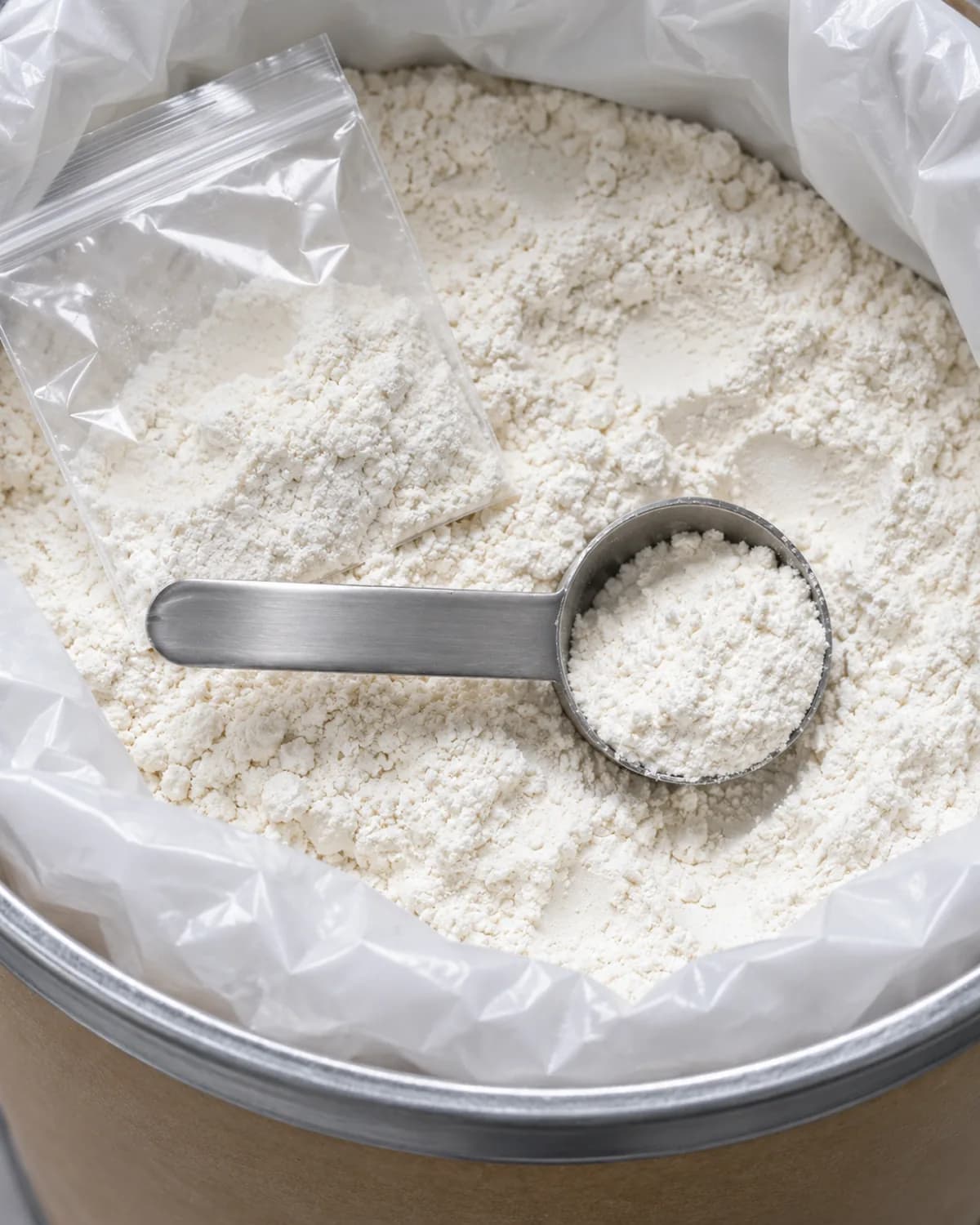
Our partner laboratory, Materia Medica Laboratories in Irvine, lists these capabilities. Only methods on its ISO/IEC 17025 scope are covered by its accreditation.
Capabilities as listed on the laboratory’s website.
Retained samples
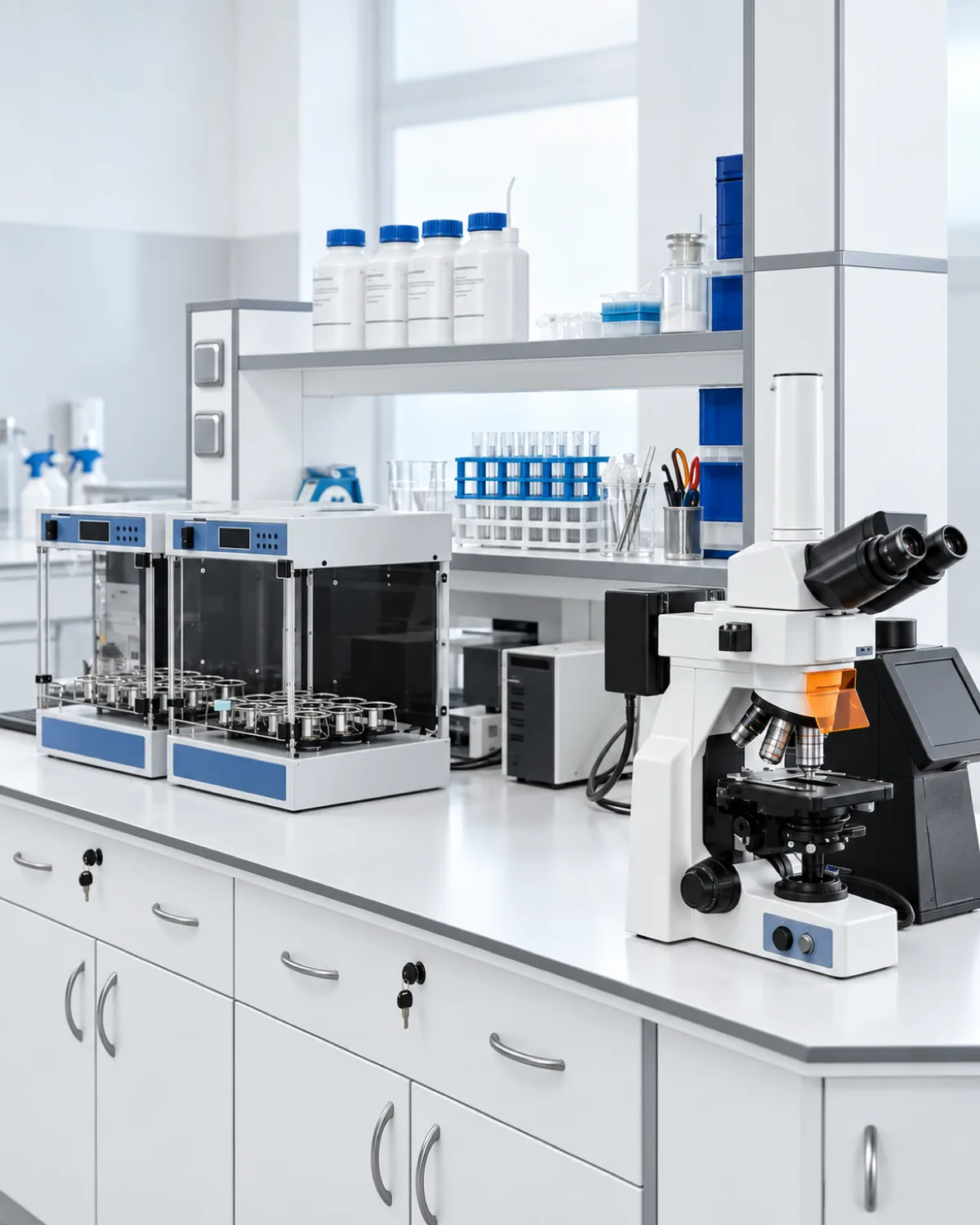
We keep retained samples of every batch we ship, so each batch can be traced and its stability checked throughout its shelf life.
Retained samples are taken from each finished batch, in the same bottle and closure used for sale, in at least twice the quantity needed for all specification tests.
Each retained sample is labeled with its batch number, and the date and storage location are recorded.
Finished products are stored in a room-temperature retention cabinet under the conditions stated on the label.
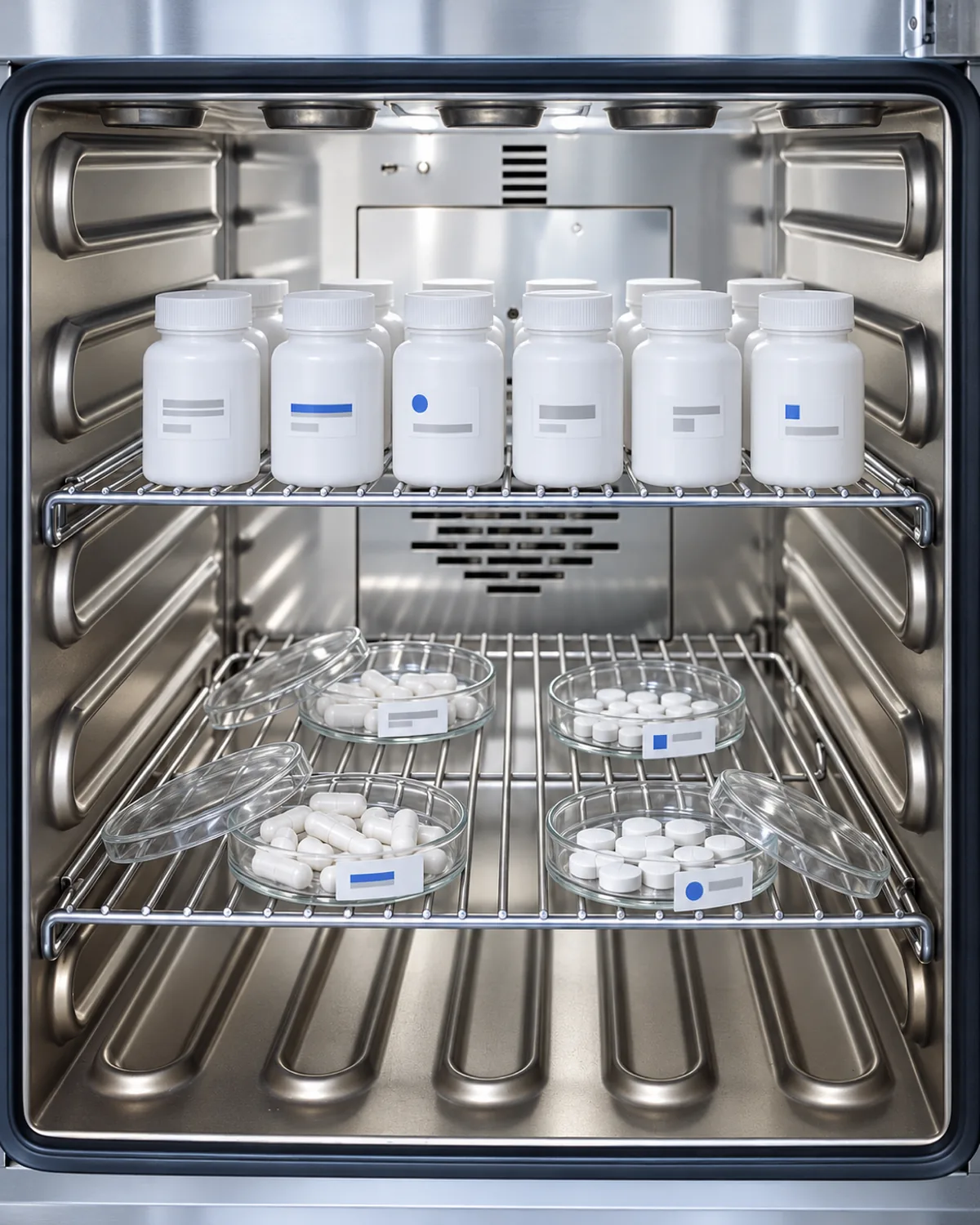
Stability chambers run at 30 °C and 40 °C with 75% relative humidity. They hold both sealed finished product and opened, exposed capsules or tablets, to show how the product behaves under accelerated conditions.
Throughout the shelf life, retained samples are pulled at agreed time points and retested to confirm that potency, microbiology and other specifications are still met.
Retests near the end of the shelf life confirm the expiry date.
If a customer reports a problem, the retained sample from the same batch is retested to find the cause.
Samples are kept for at least 1 year past the expiry date, or 2 years after the batch’s last shipment if no expiry date is used, then destroyed and the destruction recorded.
Retest time points and test items are agreed for each product in the quality agreement. Testing can be done by our ISO/IEC 17025 accredited partner laboratory.
Retention follows 21 CFR 111.83 (reserve samples).
Tell us what your approval process requires. We’ll send what we have on file and tell you plainly what we don’t.